

At first glance, everything looks appealing: low minimum deposit, tight spreads, a modern platform, and plenty of advertised advantages. Could all of this be a cover for yet another scam? If you’re considering QuoMarkets, this review is for you. Let’s try to figure out what this company is, what it offers, and what stands behind its promises.
The official QuoMarkets website is designed in a somewhat unconventional style. There is no traditional homepage. Instead, there are several rotating slides with bold, flashy slogans, followed by a footer that includes legal disclaimers and a risk warning.
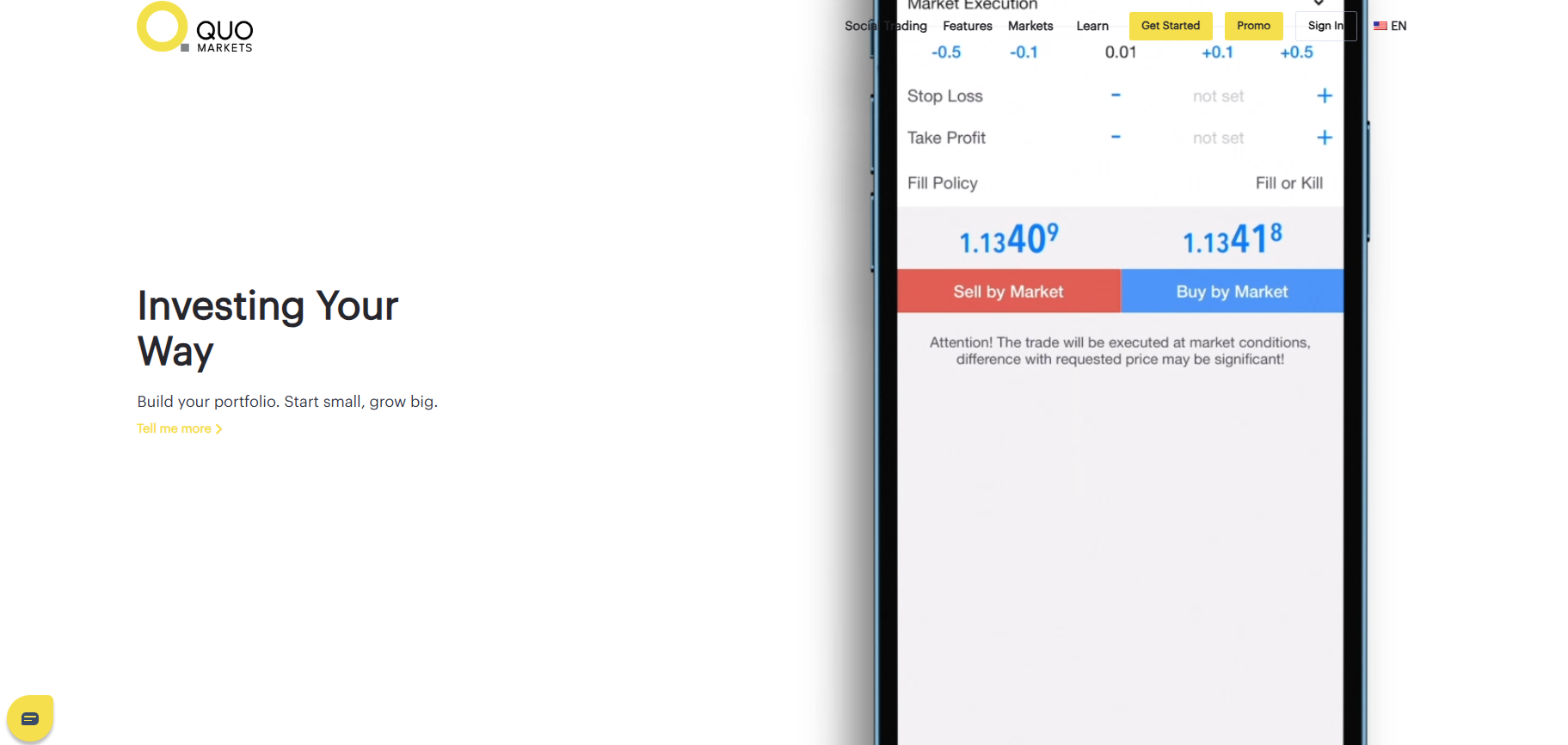
The navigation menu is located at the top: Social Trading, Features, Markets, Learn, Promo, along with Get Started and Sign In buttons. Language switching is also available (English by default, but up to 10 other languages are supported).
The first screen features people in casual clothing using laptops, giving off a cozy and friendly vibe, suggesting that “investing is easy, you can even do it from your couch”. This is a classic visual manipulation tactic aimed at engaging users who lack real market knowledge.
QuoMarkets provides access to its legal documentation, but it does not share its full background. For instance, when was the company founded? The “About Us” section reveals very little. Still, the overall appearance of the website is better than what you would find on most high-risk platforms.
Contact details can be found in a separate section. QuoMarkets provides only one email address and a phone number. Checking these details didn’t reveal anything suspicious.
In addition, the company offers an online chat for customer support. The site also displays social media icons. However, nearly all of them are inactive. For example, the Instagram and YouTube links lead nowhere, and the Twitter account shows low activity and very few followers. This clearly indicates that the broker is not widely recognized and is not focused on engaging with traders through social media.
QuoMarkets offers four types of trading accounts: RAW, STANDARD, ZERO, and LIMITLESS. Each is tailored to a different trading style, fee structure, and trader preferences regarding spreads, leverage, and platform choice.
Across all account types, the base currency can be USD, EUR, or JPY. The standard contract size is 1 lot, equivalent to 100,000 units of the base currency. The minimum trade volume is 0.01 lots. Hedging is allowed on all accounts, with the exception of MT4-related limitations on the “Limitless” account.
Leverage conditions vary by account. For RAW, STANDARD, and ZERO accounts, dynamic leverage is available up to 1:1000 or 1:2000, depending on the account type. On the LIMITLESS account, leverage is advertised as “unlimited”, although a footnote states that the company reserves the right to reduce it to a standard 1:100 level if deemed necessary for “risk protection”. All accounts include negative balance protection. A swap-free option is available upon request.
Commissions and spreads vary by account type:
QuoMarkets aggressively attracts clients with deposit bonuses and high leverage. However, such perks often lead to financial losses. Bonuses come with conditions that restrict withdrawals unless specific trading volumes are met. The company heavily promotes these incentives.
So far, nothing overtly suspicious has been found about the broker. The official website appears solid, and the trading conditions are typical of offshore firms targeting inexperienced traders. It’s essential to examine licenses and legal details to determine whether the platform can truly be trusted.
At first glance, everything looks legitimate: real addresses, registered companies, and a collection of licenses. We manually verified each jurisdiction — Dominica, Seychelles, Cyprus, and South Africa. All legal entities do in fact exist:
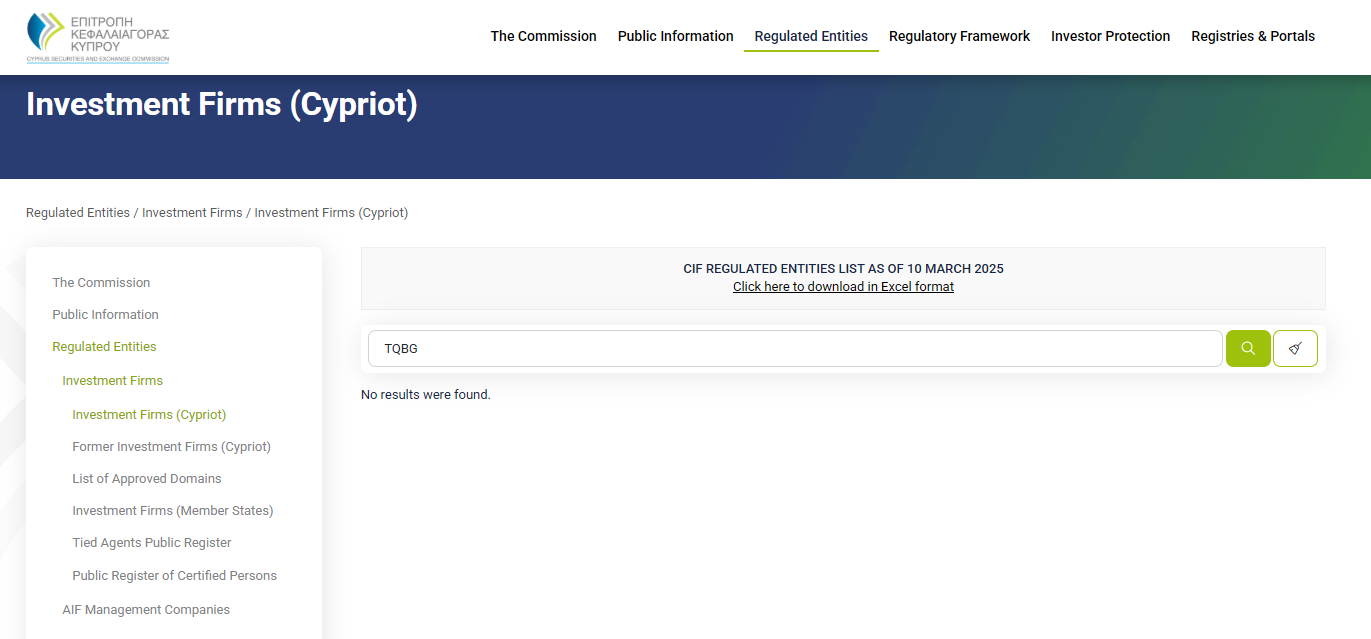
However, here’s the catch: all these registrations are formalities, not indicators of reliability. While QuoMarkets is indeed registered in Cyprus, it does not hold a CySEC license. This means it is not subject to European investor protection laws, does not keep client funds in segregated accounts, and is not part of any compensation schemes. Simply having a presence in a country means nothing without regulation from a competent authority.
Registrations in Seychelles (FSA) or Dominica are also not signs of trustworthiness. Licenses in these jurisdictions are granted easily, with little oversight, no mandatory audits, and minimal reporting requirements. These countries do not obligate brokers to protect client funds, publish financial statements, or insure deposits. Their main function is to create the illusion of “regulation”.
The FSCA in South Africa is more reputable than the regulators in Dominica or Seychelles, but it is still a local authority that does not oversee broker operations outside South Africa. Moreover, a broker can apply for the license to just one of its legal entities, while the actual business may be conducted through unregulated structures.
In essence, QuoMarkets holds no Tier-1 licenses, such as those issued by the FCA (UK), ASIC (Australia), CySEC (EU), BaFin (Germany), or FINMA (Switzerland). That means if the broker disappears tomorrow along with your funds, you will have no legal protection or recourse.
Interestingly, online reviews about QuoMarkets are predominantly positive. However, these reviews are essentially empty: they provide no evidence of consistent withdrawals or detailed user experiences. Most simply state how “great” and “amazing” everything is. It is easy to conclude that these are fake testimonials created to project the image of a reputable company. The goal is clear — to lure in inexperienced traders with money.
QuoMarkets is a prime example of how a company can appear professional while operating outside the bounds of serious regulatory oversight. Its licenses are purely formal, and its trading conditions are designed to attract novice traders quickly. While the platform technically functions, the risks are extremely high. Before depositing funds, ask yourself whether you’re ready to trade without protection or support — especially if something goes wrong.