

150,000 clients, 9 licenses, and 3 forex awards — these figures sound impressive and credible until they are actually verified. Once checked, it becomes clear that all of this is fake and points to a scam. Welcome to the CapitalFlow review, where you will see why broker claims should never be taken at face value and why independent fact-checking is always essential.
As always, let us start with the official website. From the very first screen, it aggressively sells the idea of “safety” and scale. In the “Why trade with CapitalFlow?” section, it explicitly states: over 150,000 clients, seven regulations, 16 offices, and more than 90 employees globally. On top of that, it highlights “Investor Protection” and promises such as negative balance protection and segregated bank accounts. This sounds like a standard “trust package” commonly used to push visitors toward making a quick deposit.
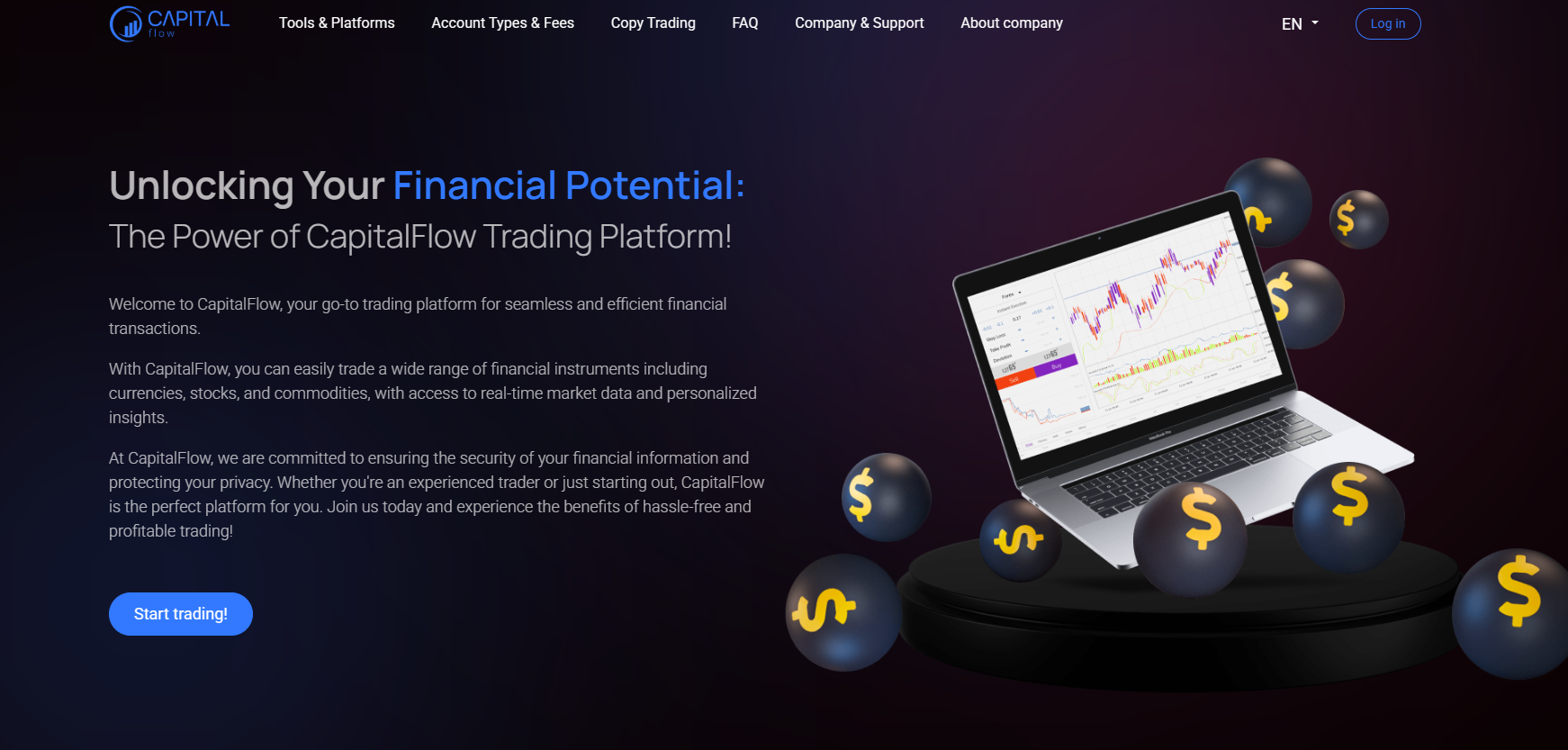
CapitalFlow boasts about licenses but does not provide any license numbers or links to official registries. Anyone can write anything, but such claims must be proven. At the same time, most of the content is nothing but meaningless marketing fluff. Phrases like “Unlocking your financial potential”, “You’re in safe hands”, “We want you to succeed”, and “We believe in endless possibilities” dominate the site. This is of zero value to a trader. What traders actually need are answers: where is the license, where is the registry, what are the commissions for each market, how orders are executed, what the withdrawal rules are, who holds the funds, and what protection truly applies in their country.
Another odd detail is the inconsistency in minimum deposit requirements. The “Quick Information” section lists $250, while the Basic account shows $100. This may seem minor, but it reflects the overall carelessness of the content. With reputable brokers, such details never conflict, because they directly relate to money and contractual terms.
The most revealing detail is the smartphone image in the “Quick Information” block. On the phone screen, the text “naga.com” and the NAGA EXCHANGE logo are clearly visible. That is a completely different company and a different website. This typically happens when a designer uses a generic stock image “about trading on a phone” and does not bother to replace it with the broker’s actual platform. For visitors, this is a clear signal: either the brand does not have a real, working product, or it deliberately avoids showing it, or the website is simply a storefront built on someone else’s images.
To contact CapitalFlow managers, only email and phone number are available. There is no live chat, no messaging app support, and no social media accounts. This does not resemble a serious brokerage company. Today, every reputable and client-oriented broker provides fast communication through live chat and actively maintains social media channels for user interaction.
The trading conditions here are built around a classic fraudulent principle. In short, traders are pushed to invest more money in order to receive “better” conditions. CapitalFlow offers three types of trading accounts:
As the description shows, the better the account tier, the more favorable the trading conditions. Moreover, CapitalFlow charges a commission only on the Gold account, 0,0035%, and also applies an inactivity fee and an administration fee. There is no detailed table of commissions and fees for each asset class.
The Savings Account deserves special attention. The minimum investment is $50,000, which is extremely high, while the promised return is 30% annually. The return is average, but the company does not disclose where such yields come from. In addition, the broker does not specify whether it has authorization to offer investment products at all.
From the very first interaction, the company raises questions. The broker loudly talks about regulation, safety, and global presence, but for an experienced trader this is not enough. Any broker is assessed not by banners, but by facts: licenses, legal details, actual operating history, and its footprint online. That is exactly what we will examine now — calmly, step by step, and with concrete evidence.
Let us start with the most important point — licenses. CapitalFlow displays a world map on its website and lists the CySEC, ASIC, FSCA, CBI, ISA, and other regulators. It sounds impressive. However, as soon as you check the official registries of these regulators, the picture falls apart. It turns out the platform does not hold a single license. This is a verifiable fact through official regulatory databases. If a broker is not listed in a registry, it does not have a license. Everything else is just logos on a website.
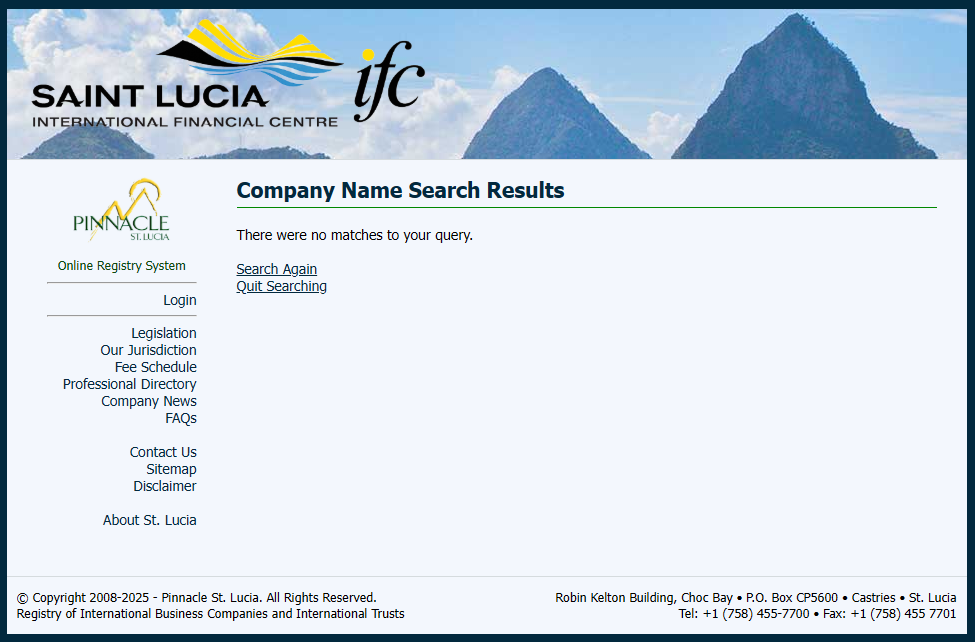
Next is Saint Lucia, which CapitalFlow references in the “About Company” section. The organization names Graincorner Ltd as its legal entity and provides a Certificate of Incorporation. However, it is crucial to understand the difference. An IBC registration certificate is not a license for financial activity. It is a standard offshore shell. Moreover, a check through the official registry of the Saint Lucia International Financial Centre shows that a company with this name cannot be found. The registry screenshot clearly states: “There were no matches to your query”.
This means either the company is not registered under the stated details at all, or a fictitious or unverified legal entity is being used. In both cases, this is a direct sign of a fake broker. And a fake broker means no deposit protection, no fund segregation, and no real guarantees whatsoever.
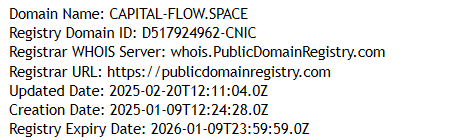
CapitalFlow does not provide a clear founding date. There is no history, no mention of a launch, and no old press releases. This alone is suspicious. A domain check shows that the platform was launched only in 2025. That means this is a very young project with no confirmed history, no market reputation, and no experience surviving market crises. Youth alone is not a crime, but combined with fake licenses, it becomes a major red flag.
The final point is online reviews. There are very few of them. There are no widespread discussions on trading forums. There is no long review history spanning several years. There are no independent reviews from major financial portals. This indicates that CapitalFlow lacks real experience and reputation.
For a broker claiming 150,000 clients, such informational silence looks absurd. When a broker actually operates at scale, reviews appear naturally — both positive and negative. When there are almost no reviews, it usually means one thing: the project is new, trading volumes are minimal, and market trust is absent.
A review of the company reveals a very simple picture: there are no licenses, the legal information is not verified, and the operating history is minimal. Such a broker offers neither regulatory protection nor transparent conditions. From a trading and risk management perspective, CapitalFlow looks like a project that is best avoided.